The USS Tampa wreck has been discovered more than 107 years after it sank during World War I, marking a significant moment in maritime history. The vessel, operated by the United States Coast Guard, was lost in 1918 with all 131 crew members aboard, making it the largest naval loss for the United States during the war.
The discovery was announced by the Coast Guard after a British volunteer group, the Gasperados Dive Team, successfully located the wreck last weekend. The team had been searching for the USS Tampa wreck since 2023, combining research and repeated dive expeditions to identify its final resting place.
Location of the USS Tampa Wreck Off Cornwall
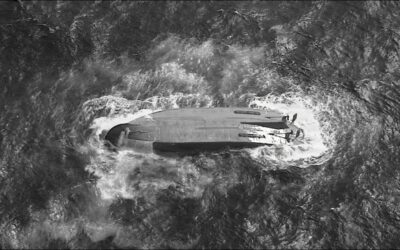
The USS Tampa wreck was found at a depth of approximately 300 feet (91 meters) in the Atlantic Ocean. The site lies around 50 miles (80 kilometers) off the coast of Cornwall, England.
According to information shared by the United States Coast Guard, the identification of the wreck was supported by historical records and archival images. These included details such as deck fittings, the ship’s wheel, bell, and weaponry, which matched the features observed by the divers.
The Gasperados Dive Team described the discovery as the result of three years of dedicated work. The group carried out multiple dives on potential targets before confirming the USS Tampa wreck. Their efforts highlight the role of collaboration between researchers, historians, and technical divers in underwater exploration.
How the USS Tampa Sank in 1918
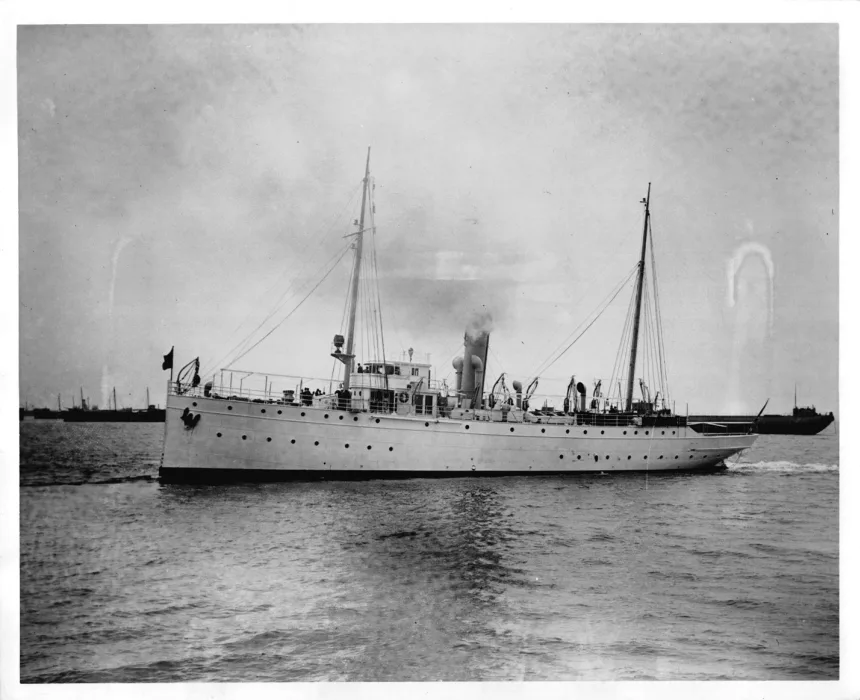
A historical photo of Coast Guard Cutter Tampa, which was lost in 1918 during World War I after being torpedoed by a German submarine. (U.S. Coast Guard)
Historical accounts detail the final voyage of the USS Tampa during World War I. On September 17, 1918, the ship began escort duty for a convoy in the Atlantic Ocean.
On September 26, the ship’s captain requested permission to leave the convoy because the vessel was running dangerously low on coal needed to power its boilers. Permission was granted, and the USS Tampa set course for a port in Wales at full speed around 4 p.m.
At approximately 8:15 p.m. the same evening, the ship was spotted by a German submarine identified as UB-41. The submarine fired a single torpedo at the USS Tampa.
The impact was devastating. Within three minutes of the torpedo striking the vessel amidships, the ship sank. Reports indicate that the initial explosion was followed by a secondary blast, which may have been caused by ignited coal dust or the detonation of depth charges carried onboard.
The USS Tampa wreck remains the final resting place for all 131 people on board, as there were no survivors from the incident.
Search Efforts and Discovery Confirmation
When the USS Tampa failed to reach its destination, search efforts were launched. A plane sent to locate the ship the following day found debris floating in the water, confirming that the vessel had been destroyed.
More than a century later, the discovery of the USS Tampa wreck provides confirmation of its location and condition beneath the sea. The Coast Guard played a key role in verifying the wreck by supplying archival materials to the dive team.
William Thiesen, a historian for the Coast Guard’s Atlantic area, stated that the use of archival imagery was essential in confirming the identity of the wreck.
Casualties and Historical Significance
The sinking of the USS Tampa resulted in the loss of 131 lives. Those on board included 111 Coast Guardsmen, four U.S. Navy sailors, and 16 British individuals, including Royal Navy personnel and civilians.
The crew came from diverse backgrounds across the United States. Historical records also note that some were immigrants from Russia and Norway. Among the погибших were 11 Black crew members, who are recognized as the first minority Coast Guardsmen killed in combat.
The loss of the USS Tampa had a lasting impact on the United States Coast Guard. Coast Guard Commandant Adm. Kevin Lunday stated that the tragedy left an enduring sense of grief within the service. He noted that locating the USS Tampa wreck helps connect present generations with the sacrifice of those who served.
Future Plans to Explore the USS Tampa Wreck
Following the discovery, the United States Coast Guard announced plans to further explore the USS Tampa wreck. These efforts are expected to involve the use of autonomous systems and robotic technology to study the site in greater detail.
The wreck is considered both a тарихи site and a maritime grave, and any exploration will be conducted with respect for those who lost their lives.
Conclusion
The discovery of the USS Tampa wreck marks a major milestone in understanding one of the most significant losses in U.S. naval history during World War I. After more than a century, the location of the ship is finally known, offering closure to families and honoring the memory of the 131 individuals who perished.