
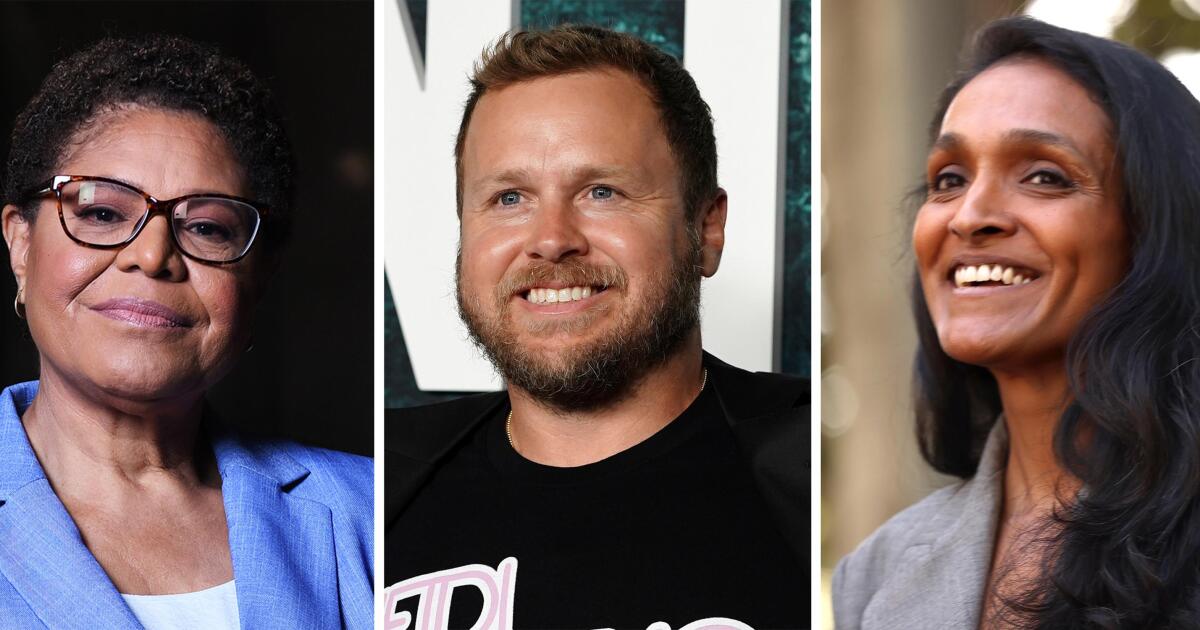
Reality television personality Spencer Pratt is polling in third place for Los Angeles mayor, according to a new UC Berkeley survey released Sunday. The poll shows incumbent Mayor Karen Bass leading with 25% support but facing significant voter disapproval. Councilmember Nithya Raman follows in second place with 17% of likely voters. The primary election is scheduled for June 2, providing an early snapshot of the competitive race.
The survey of 840 likely voters was conducted between March 9 and March 15. It was co-sponsored by the Los Angeles Times and the UC Berkeley Institute of Governmental Studies. About a quarter of all respondents remained undecided on their candidate choice. This indicates a fluid political landscape less than three months before voters head to the polls.
Mayor Bass’s 25% lead is tempered by a 56% unfavorable rating among those surveyed. Only 31% of polled voters reported having a favorable view of the incumbent. Political analyst Dan Schnur described the numbers as borderline catastrophic for a leading candidate. He noted the weak field of challengers is a primary factor in her current position.
Conservative figure Spencer Pratt secured 14% support, placing him ahead of several other candidates. Leftist candidate Rae Huang received 8% support from those polled. Tech entrepreneur Adam Miller followed closely with 6% backing. The results highlight a fragmented field with no single dominant figure.
Bass has faced sustained criticism over her handling of major city issues. The devastating Palisades fire response remains a significant point of contention for voters. This ongoing public perception challenge could impact her reelection bid significantly. The high number of undecided voters will be a critical battleground.
For an international audience, the race underscores LA’s unique blend of celebrity and politics. Spencer Pratt’s notable polling reflects the enduring influence of reality TV fame in American culture. The city’s mayoral elections often draw global attention due to Los Angeles’s economic and cultural stature. The final outcome will shape policy on homelessness, public safety, and climate resilience.