
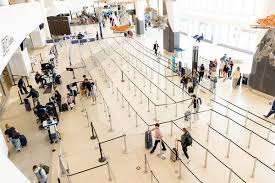
Travelers at select U.S. airports are experiencing security wait times measured in minutes, not hours, according to recent operational data. This stark contrast to typical Transportation Security Administration (TSA) checkpoint delays occurs at facilities using private screening contractors. The trend highlights a growing discussion on aviation security efficiency and passenger experience. These airports operate under the TSA’s Screening Partnership Program (SPP). The program allows airports to opt for federally approved private security firms.
Data from several SPP airports, like San Francisco International (SFO) and Kansas City International (MCI), shows consistent sub-10-minute average waits. This performance often surpasses that of major TSA-staffed hubs during peak travel periods. For international context, similar private screening models are used in countries like Canada and the United Kingdom. The efficiency raises questions about resource allocation and process innovation within national security frameworks. Proponents argue competition drives better service and technological adoption.
The TSA’s own data indicates national average wait times for standard lanes hover around 30 minutes at busy times. However, peak delays at major airports like Atlanta (ATL) or Chicago O’Hare (ORD) can exceed 45 minutes. The agency manages security for approximately 430 airports nationwide. Only a fraction, about 20 airports, currently participate in the private screening program. This creates a natural comparison point for travelers and industry analysts.
Key factors contributing to shorter waits include optimized staffing models and advanced technology deployment. Private contractors often utilize automated screening lanes and computed tomography (CT) scanners more extensively. These technologies speed up the bin handling and threat detection processes significantly. Furthermore, flexible labor agreements can allow for rapid scaling of staff during surge periods. This operational agility is harder to achieve within federal government staffing constraints.
The debate touches on core issues of security, cost, and federal oversight. Critics of private screening question potential consistency and oversight compared to a unified federal force. The TSA retains ultimate regulatory authority and sets standards for all screening, regardless of contractor. The discussion is particularly relevant as passenger volumes rebound and surpass pre-pandemic levels. Airports and airlines are under intense pressure to improve the end-to-end travel journey. Efficient security is a critical component of that experience.
As summer travel peaks, the disparity in wait times will likely draw more public attention. Travelers may begin to factor security queue reliability into their airport choice, especially for regional trips. This could influence airport revenue and airline scheduling decisions in competitive markets. The long-term impact may push the TSA to accelerate its own modernization and efficiency initiatives. The performance of SPP airports serves as a live benchmark for the entire aviation security ecosystem.