
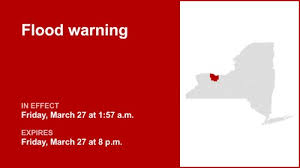
A flood warning is in effect for Monroe County, New York, until 8 PM EDT Friday, triggered by prolonged and significant rainfall across the region. The National Weather Service issued the alert for areas including Rochester and its surrounding communities. This situation highlights how intense precipitation can overwhelm local drainage systems and waterways. Residents are advised to exercise extreme caution, particularly when traveling.
The warning follows several days of steady rain that has saturated the ground across Upstate New York. This saturation reduces the land’s ability to absorb additional water, increasing runoff into creeks and rivers. Small streams and urban areas are especially vulnerable to rapid water level rises. Such events are becoming more frequent in the Northeastern United States. Climate scientists link this trend to changing precipitation patterns.
Key infrastructure, including roads near streams and creeks, is at high risk of flooding. The NWS specifically warns against driving through flooded roadways, noting that just six inches of moving water can stall a vehicle. Monroe County’s emergency management teams are monitoring water levels closely. Data from local river gauges is critical for issuing timely public alerts. This proactive monitoring is a key tool for modern disaster preparedness.
For international context, flood warnings are a common tool used by meteorological agencies worldwide to mitigate disaster risk. Systems like the US’s Advanced Hydrologic Prediction Service use sensor networks and modeling to predict water flow. Similar technology is deployed in flood-prone regions across Europe and Asia. These systems save lives by providing crucial lead time. Effective communication of these warnings to the public remains a global challenge.
The situation in Monroe County serves as a reminder of the growing intersection between climate, technology, and public safety. Accurate forecasting relies on sophisticated satellite data and computer models. Communities increasingly depend on real-time alerts sent to smartphones. As extreme weather events intensify, the role of predictive technology will only expand. Preparedness and heeding official warnings are essential for community resilience.