
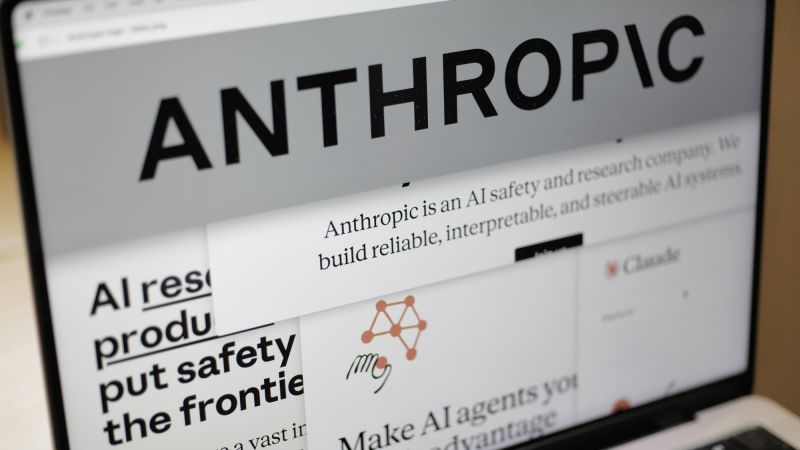
A U.S. federal judge has temporarily halted the Department of Defense’s attempt to designate artificial intelligence firm Anthropic as a supply chain risk. The ruling came late Friday from the U.S. District Court for the District of Columbia. This legal action prevents the Pentagon from imposing potentially severe restrictions on the AI company. The judge suggested the designation appeared to be a punitive measure. The case highlights growing tensions between government security concerns and the AI industry.
The Pentagon’s move would have classified Anthropic under a specific national security provision. This classification can severely limit a company’s ability to secure government contracts. It also restricts partnerships with other federal agencies and contractors. Anthropic argued the designation was unfounded and lacked proper procedural justification. The company’s flagship AI model, Claude, is a direct competitor to offerings from OpenAI and Google.
Legal documents reveal the DoD’s concerns centered on Anthropic’s corporate structure and funding sources. The department cited potential foreign influence, though specific evidence was not publicly detailed. Anthropic, co-founded by former OpenAI executives, has received significant investment from Amazon. The company is also backed by Google and other venture capital firms. This case tests the boundaries of the government’s authority to regulate emerging tech sectors.
For international observers, this dispute underscores a global regulatory dilemma. Governments worldwide are grappling with how to oversee powerful AI technologies. The balance between innovation, economic competition, and national security remains elusive. The U.S. action against a domestic firm signals a particularly aggressive stance. Other nations may view this as a precedent for their own AI governance frameworks.
The injunction is temporary, pending a fuller hearing on the merits of the case. The outcome could set a significant legal precedent for how AI companies interact with the U.S. government. A final ruling is expected within the next 90 days. This period will allow both parties to submit more detailed evidence and arguments. The tech industry is closely watching this case for its broader implications.